


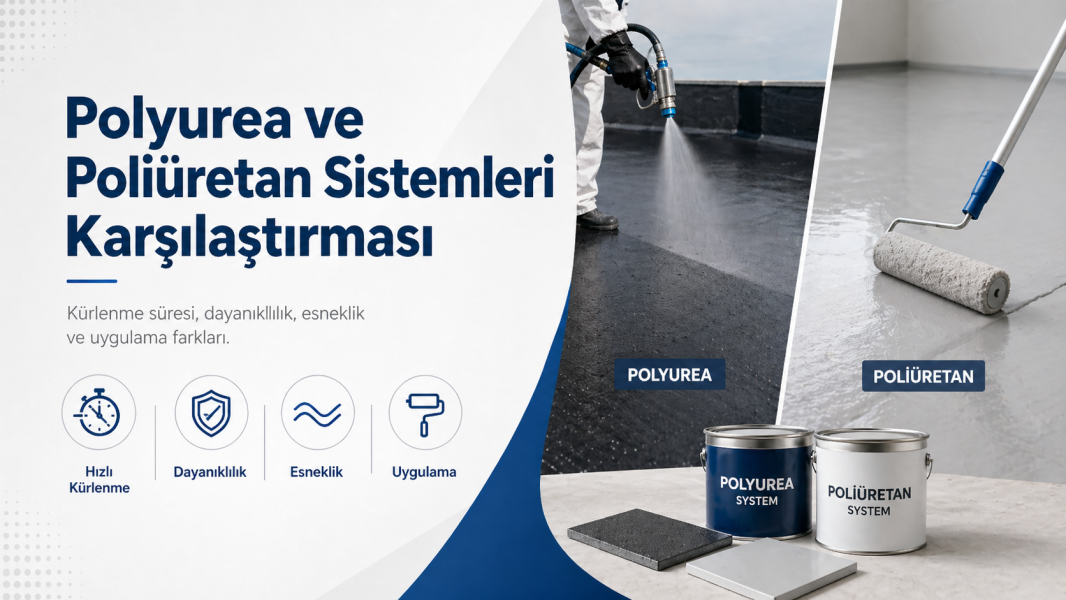
Comparison of Polyurea and Polyurethane Systems
Polyurea and polyurethane systems are high-performance chemical solutions widely used in waterproofing, flooring, surface protection, insulation, and industrial applications. Both systems stand out for their durability, flexibility, and long-lasting protection. However, they differ in application areas, application methods, curing time, mechanical strength, and cost.
Choosing the right system is critical for application success and long-term surface protection. Therefore, when comparing polyurea and polyurethane systems, factors such as environmental conditions, surface type, performance expectations, and application process must be evaluated together.
What Is Polyurea?
Polyurea is a two-component, fast-curing coating and waterproofing system with high elasticity. It is typically applied using hot spray equipment and reacts very quickly to form a seamless, durable, and waterproof layer.
Thanks to its high mechanical strength, impact resistance, chemical resistance, and flexibility, polyurea is widely used in roofs, terraces, foundations, water tanks, parking areas, industrial floors, bridges, tunnels, pools, wastewater facilities, and heavy-duty applications.
One of the main advantages of polyurea is its extremely fast curing time, allowing surfaces to be used shortly after application.
What Is Polyurethane?
Polyurethane is a versatile chemical material used in coatings, insulation, adhesives, foams, sealants, and flooring systems. It can be formulated with different levels of hardness and flexibility depending on the application.
Polyurethane systems are widely used in thermal insulation, sound insulation, surface protection, flooring, furniture, automotive, appliances, cold storage, roofing, and industrial applications.
Its flexibility, good adhesion, ease of application, and adaptability across industries make polyurethane a cost-effective and efficient solution.
Key Differences Between Polyurea and Polyurethane
Although both systems can be used in similar areas, their performance characteristics differ significantly.
Polyurea is preferred in projects requiring:
Extremely fast curing
High mechanical strength
Maximum protection under harsh conditions
Polyurethane is preferred in applications requiring:
Versatility
Thermal insulation
Flexibility
Cost efficiency
Polyurea typically requires professional equipment and specialized application, while polyurethane systems offer more flexible application methods depending on the product type.
Curing and Drying Time
Polyurea cures extremely fast. It begins reacting within seconds after application and becomes usable in a very short time. This makes it ideal for industrial facilities, parking areas, production zones, and infrastructure projects where downtime must be minimized.
Polyurethane systems have varying curing times depending on the formulation. While some cure quickly, they generally do not reach full performance as fast as polyurea. However, they offer longer working time, which is beneficial for detailed applications.
Mechanical Strength and Durability
Polyurea systems provide excellent resistance to impact, abrasion, vibration, cracking, and heavy loads, making them suitable for industrial floors, bridges, tunnels, and heavy traffic areas.
Polyurethane systems also offer strong and flexible performance, especially in insulation, furniture, automotive, and coating applications. However, polyurea is generally preferred in environments with extreme mechanical stress.
Waterproofing Performance
Polyurea forms a seamless and joint-free membrane that provides excellent waterproofing performance in roofs, terraces, foundations, tanks, pools, and tunnels.
Polyurethane systems are also widely used for waterproofing, especially in liquid membrane applications. However, polyurea is often preferred in more demanding conditions or high-pressure water exposure.
Flexibility and Crack Bridging
Both systems are flexible. Polyurea offers superior elasticity and excellent crack-bridging ability, making it suitable for structures with movement.
Polyurethane also provides flexibility and is effective in roofing and insulation applications. However, polyurea generally performs better in highly dynamic or demanding environments.
Chemical Resistance
Polyurea offers high resistance to oils, fuels, solvents, and industrial chemicals, making it suitable for harsh industrial environments.
Polyurethane also provides chemical resistance, but performance varies depending on formulation. Therefore, chemical exposure conditions must be carefully evaluated when selecting polyurethane systems.
Application Method and Equipment
Polyurea is typically applied using high-pressure, heated spray equipment, requiring professional installation and experienced applicators.
Polyurethane systems offer more flexible application methods, including roller, brush, spray, and injection, depending on the product type.
Cost Comparison
Polyurea systems generally have a higher initial cost due to specialized equipment and high-performance formulation. However, they can provide long-term cost advantages through durability and low maintenance.
Polyurethane systems are usually more cost-effective and offer a strong balance between price and performance, especially in standard insulation and coating applications.
Conclusion
Polyurea and polyurethane systems both play a critical role in modern construction and industrial coatings.
Polyurea is ideal for fast curing, high durability, strong waterproofing, and extreme conditions.
Polyurethane is ideal for versatile use, insulation performance, flexibility, and cost-effective solutions.
The best choice depends on project requirements, surface type, environmental conditions, chemical exposure, and performance expectations.